Why Can't I Say No Without Feeling Guilty
Short Answer
You cannot say no because your survival once depended on yes. The child who learned that refusal meant punishment, abandonment, or the withdrawal of love grows into the adult who cannot set boundaries without feeling like they are committing a crime. Every no feels like a betrayal, every boundary like an act of aggression. You are not weak. You are responding to a nervous system that learned agreement was the price of safety. Your inability to say no is not a character flaw. It is an adaptive strategy that once served a protective function but has become a prison.
What This Means
The experience is exhausting and invisible. You agree to things you do not want to do, with people you do not want to do them with, at times you cannot afford. You say yes to the project, the favour, the plan, the relationship — not because you want them, but because the alternative feels like death. The word "no" sits in your throat like a physical obstruction, and when you try to speak it, your heart races, your palms sweat, your mind floods with catastrophic predictions of what will happen if you refuse. So you say yes, again, and the resentment builds like pressure in a sealed container.
The cost is not just in the things you do against your will. It is in the life you are not living while you are living for others. Your time, your energy, your attention — all diverted into commitments you never wanted, relationships you do not value, obligations that drain you empty. You become a ghost in your own life, performing a role you never auditioned for, and the people around you do not even know you are acting because your performance is so convincing. They think you are happy to help. They do not see the cost.
The inability to say no also erodes your sense of self. Boundaries are how we know who we are. They are the lines that say: this is me, this is not me; I want this, I do not want that. Without boundaries, you become a reflection of other people's desires, a mirror that shows only what others want to see. You lose track of your own preferences, your own needs, your own direction. You become a person who exists only in relation to others, and the self that exists independently slowly atrophies from disuse.
Why This Happens
This pattern originates in environments where refusal was dangerous. A parent who punished disagreement. A family system where compliance was mandatory and autonomy was punished. A culture that tells certain people — usually women, usually marginalised — that their job is to accommodate, to please, to make themselves agreeable. The child learns that their needs are less important than others', that their preferences are selfish, that their boundaries are an act of aggression. They learn to say yes before they learn to say no, and by the time they are adults, the no has been buried so deep it feels like it does not exist.
Neuroscience explains this through the concept of conditioned compliance and the threat response. When a child's no is consistently met with punishment, withdrawal, or shame, the brain encodes refusal as a survival threat. The amygdala, which processes danger, cannot distinguish between a parent who will hit them for saying no and a colleague who might be disappointed. Both trigger the same physiological response: elevated heart rate, cortisol release, the urge to comply. The adult who cannot say no is not being weak. They are responding to a body that learned that refusal equals danger.
The culture reinforces this with its contradictory messages. Be assertive, but not aggressive. Have boundaries, but don't be difficult. Take care of yourself, but don't be selfish. The person who cannot say no absorbs these impossible standards and tries to satisfy them by saying yes to everything, hoping that eventually their compliance will earn them the right to have needs. It never does. The world takes what is offered and asks for more, and the person who cannot say no keeps giving because they do not know how to stop. These are not character flaws; they are adaptive strategies that once served a protective function but have become prisons.
What Can Help
Practice saying no in low-stakes environments. Start with strangers, then acquaintances, then friends. Say no to the salesperson, the survey, the favour you do not have energy for. Notice that the world does not end. Notice that people do not collapse in the face of your refusal. Each small no builds the neural pathway that says refusal is survivable. You are not trying to become selfish. You are trying to become proportionate: to say yes when you mean it and no when you do not.
Name the fear that drives your yes. Before you automatically agree to something, pause. Ask: "What am I afraid will happen if I say no?" The answer will usually reveal a childhood fear — abandonment, punishment, withdrawal of love — that is not actually present in the current situation. Naming the fear does not eliminate it, but it creates distance between the childhood template and the adult reality. You can then choose your response based on what is actually true, not on what once was.
Start with a delay. If you cannot say no immediately, buy yourself time. Say: "Let me think about it and get back to you." This creates space between the request and your response, space in which you can consult your actual preferences rather than your automatic compliance. The delay is not cowardice. It is a training wheel while you learn to ride the bicycle of boundaries.
Build a life where no is possible. If your survival depends on a specific job, relationship, or situation where yes is mandatory, consider whether that dependency is sustainable. Sometimes the inability to say no is not a personal failing but a structural one. If you are trapped in a situation where refusal means homelessness, starvation, or violence, your yes is not a boundary issue. It is a survival issue, and the solution may require external support, not just internal work.
Consider therapy if you cannot say no without panic or paralysis. Modalities like CBT, ACT, or assertiveness training can help you identify the specific fears that drive your compliance, challenge the beliefs that maintain them, and build the skills required to set boundaries without terror. A therapist can also provide the safe relationship where no is acceptable, modelling what it looks like to be valued even when you refuse.
When to Seek Support
Seek professional help if you experience panic, paralysis, or dissociation when trying to say no, if you find yourself agreeing to things that violate your values or safety, or if your inability to set boundaries is causing chronic resentment, exhaustion, or relationship conflict.
A trauma-informed therapist can help you trace the origins of your inability to say no to specific childhood experiences where refusal was punished, work with the parts of you that still believe boundaries equal danger, and build the internal security required to refuse without terror. Modalities that address the body-level fear — somatic experiencing, EMDR — are particularly useful because the fear of saying no is stored in the body, not just the mind.
You do not need to have suffered catastrophic abuse to deserve help. If this is limiting your life, that is reason enough.
People Also Ask
- Why Do I People Please Until I Resent Everyone
- Why Do I Give And Give Until I Have Nothing Left
- Why Do I Feel Responsible For Everyone Elses Emotions
- Why Do I Apologise For Everything Even When Its Not My Fault
- Why Do I Freeze Up In Arguments Instead Of Standing Up For Myself
Related
- Why Do I People Please Until I Resent Everyone
- Why Do I Give And Give Until I Have Nothing Left
- Why Do I Feel Responsible For Everyone Elses Emotions
- Why Do I Apologise For Everything Even When Its Not My Fault
- Why Do I Freeze Up In Arguments Instead Of Standing Up For Myself
Ready to Reset Your Nervous System?
Join thousands who have used somatic practices to reclaim stability and peace.
Start the Reset →Research References
This content draws from peer-reviewed research and established clinical frameworks.
Primary Research
- Ressler, K.J. et al. (2022). Post-traumatic stress disorder: clinical and translational neuroscience from cells to circuits. Nat Rev Neurol, 18(5), 273-288. [Link]
- Ehlers, A. & Clark, D.M. (2000). A cognitive model of posttraumatic stress disorder. Behav Res Ther, 38(4), 319-345. [Link]
- Felitti, V.J. et al. (1998). Relationship of childhood abuse and household dysfunction to many of the leading causes of death in adults: The ACE Study. Am J Prev Med, 14(4), 245-258. [Link]
- Bremner, J.D. (2006). Traumatic stress: effects on the brain. Dialogues Clin Neurosci, 8(4), 445-461. [Link]
Foundational Authorities
About the Author
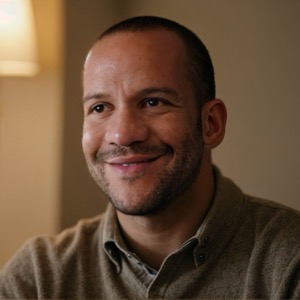
Robert Greene is a writer and strategist focused on human behavior, relationships, and personal development. Drawing from lived experience, global travel, and diverse perspectives, he explores the patterns driving how people think, connect, and self-sabotage. His work challenges conventional narratives around mental health, modern relationships, and personal growth. Because awareness is where real change begins.
Reviewed by editorial team. Last updated: July 2026.